



Styles of Okinawan Karate

okinawan-karate-001-slide
okinawan-karate-002-slide
okinawan-karate-003-slide
okinawan-karate-004-slide
okinawan-karate-005-slide


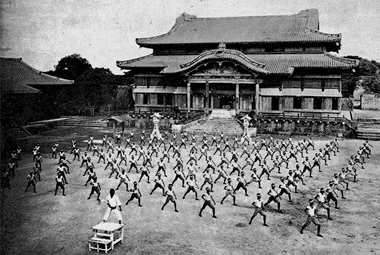
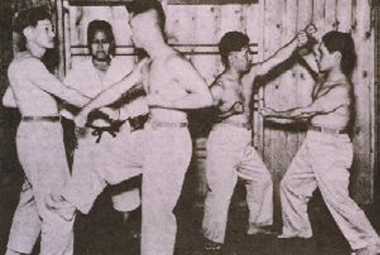
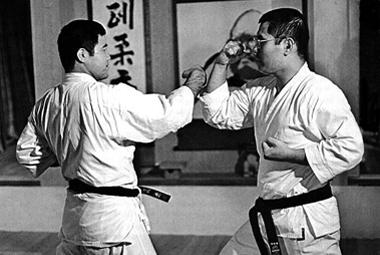
Okinawan martial arts refers to martial arts, such as karate, tegumi and Okinawan kobudō, which originated among the indigenous people of Okinawa. Due to its central location, Okinawa was influenced by various cultures with a long history of trade and cultural exchange, including Japan, China and Southeast Asia, that greatly influenced the development of martial arts on Okinawa.

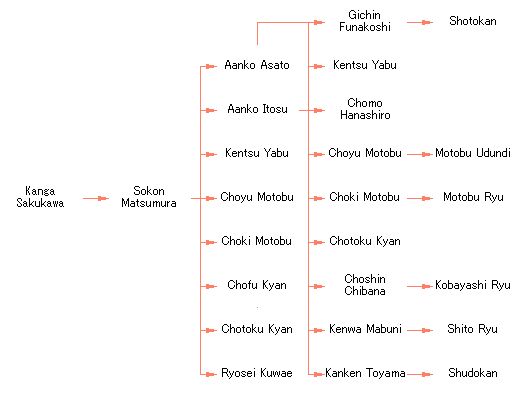
We would like to introduce you to five main styles: Goju-ryu, Uechi-ryu, Shorin-ryu (小林流&少林流), and Matsubayashi-ryu. Below you will find a short introduction to each style.
Goju-ryu
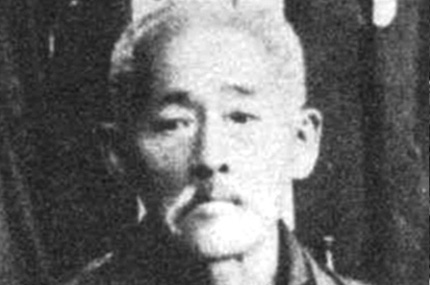
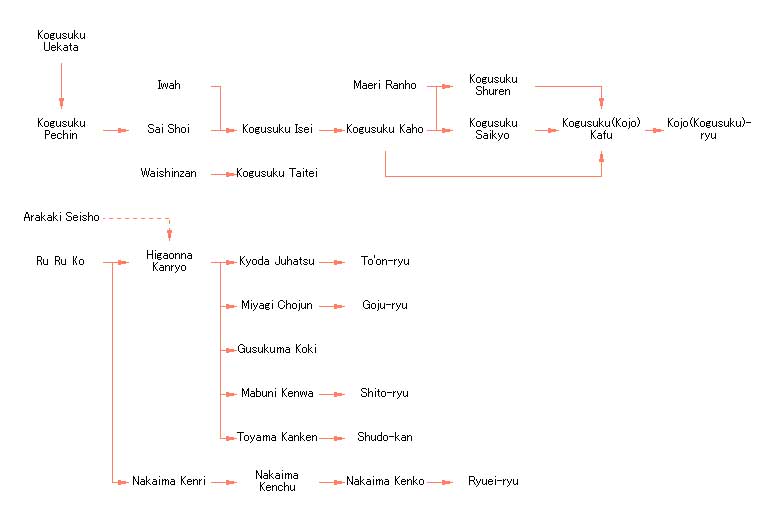
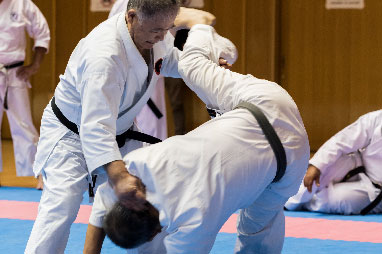
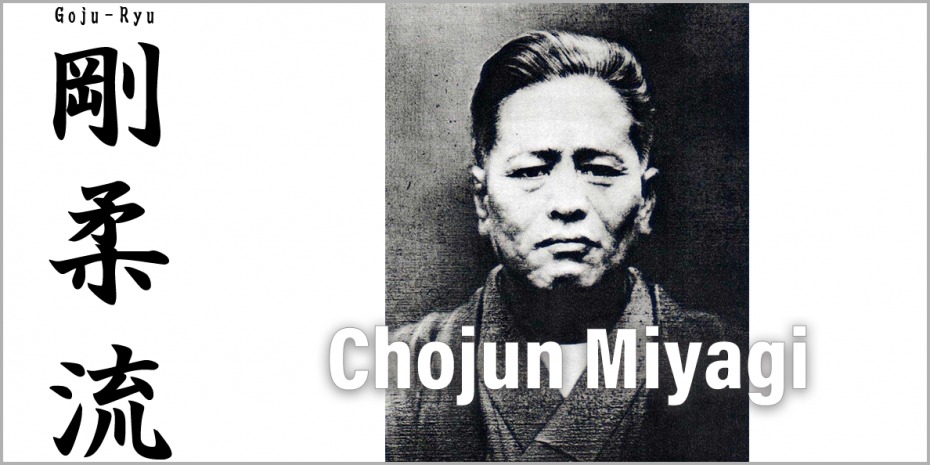
Goju-ryu (剛柔流) is one of the main traditional style of Okinawan Karate, featuring a combination of hard and soft techniques. Kanryo Higaonna (1853-1915) was known as the highest authority of Naha Te. He and his successor Chojun Miyagi (1888-1953) made several basics. Go means hard, refers to closed hand techniques or straight linear attacks, Ju means soft, refers to open hand techniques and circular movements. Goju-ryu incorporates both circular and linear movements into its basic method, combining hard striking attacks such as kicks and close hand punches with softer open hand circular techniques for attacking, blocking, and controlling the opponent, including locks, grappling, takedowns, and throws. Breathing method is also very important.

Please click here for a list of Goju-ryu dojos we offer training at.

Uechi-ryu
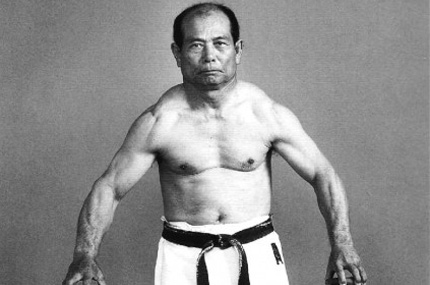
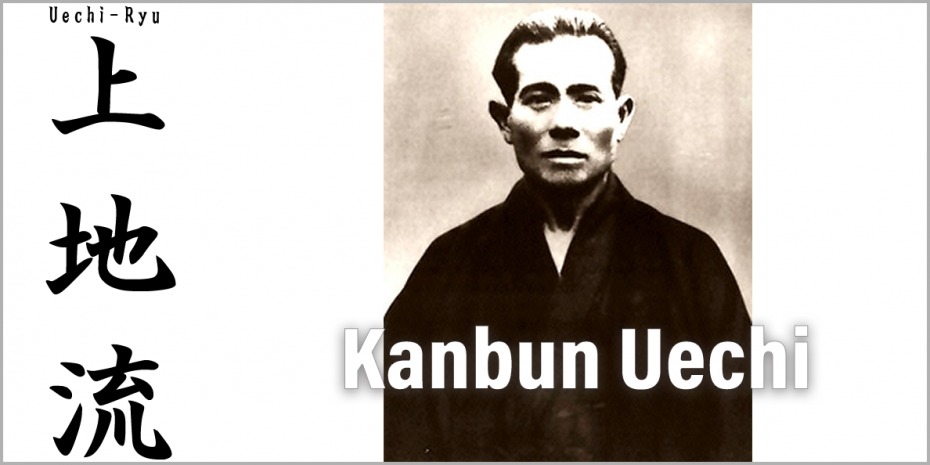
Uechi-ryu (上地流) is a traditional style of Okinawan karate. Uechi-ryu means “Style of Uechi”. Originally called Pangai-noon, which translates to English as “half-hard, half-soft”, the style was renamed Uechi-ryu after the founder of the style, Kanbun Uechi (1877-1948). Uechi-ryu’s connection with Chinese Shorin-ken means the former shares a similar foundation with Naha-Te despite their separate development. Therefore Uechi-ryu is also heavily influenced by the kung fu from Fujian province. Uechi-ryu training styles are focused only on Sanchin training and body conditioning.

Please click here for a list of Goju-ryu dojos we offer training at.

Shorin(小林)-ryu
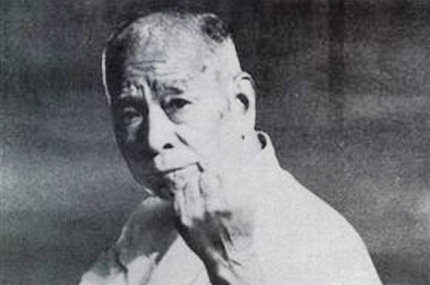
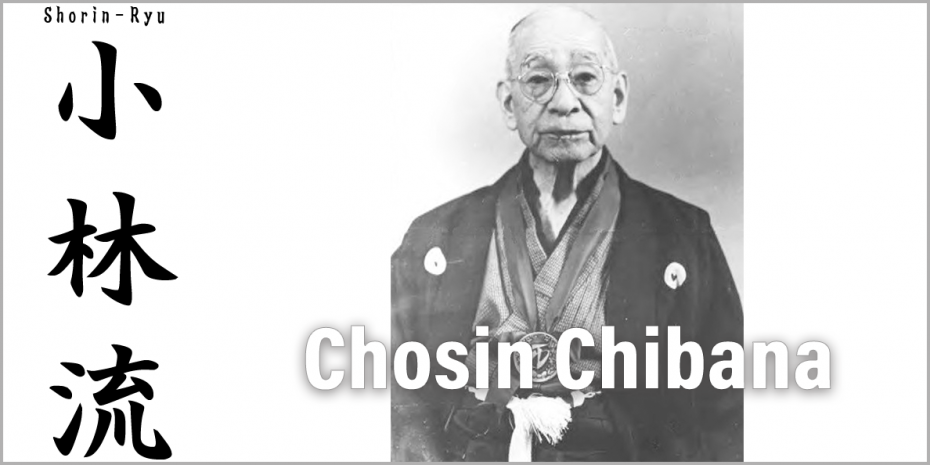
Shorin (小林) -ryu is one of the major modern Okinawa styles of Karate and one of the oldest style. It was named by Choshin Chibana (1885-1969) in 1933, but the system itself is much older. Chosin Chibana was a top student of the great master of Shuri-te, Anko Itosu (1831-1915). The characters Shorin (小林), meaning “small” and “forest” respectively and pronounced “shorin” in Japanese, are also used in the Chinese and Japanese words for Shaolin Kung Fu. Shorin-ryu adjusts elements of the traditional fighting styles of Shuri-Te. Shorin-ryu karate is the swift, fast techniques based on the strategy of evasion and in the same time attacking to sensitive spots of the body with hits.

Please click here for a list of Shorin-ryu dojos we offer training at.

Shorin(小林)-ryu
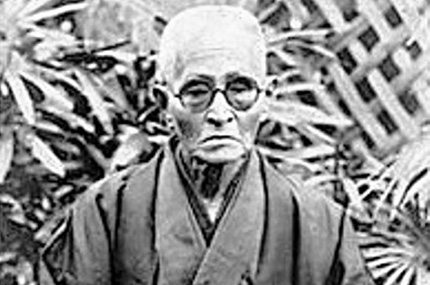
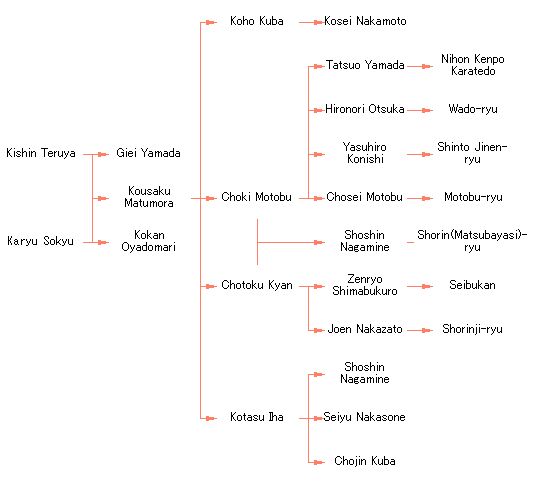
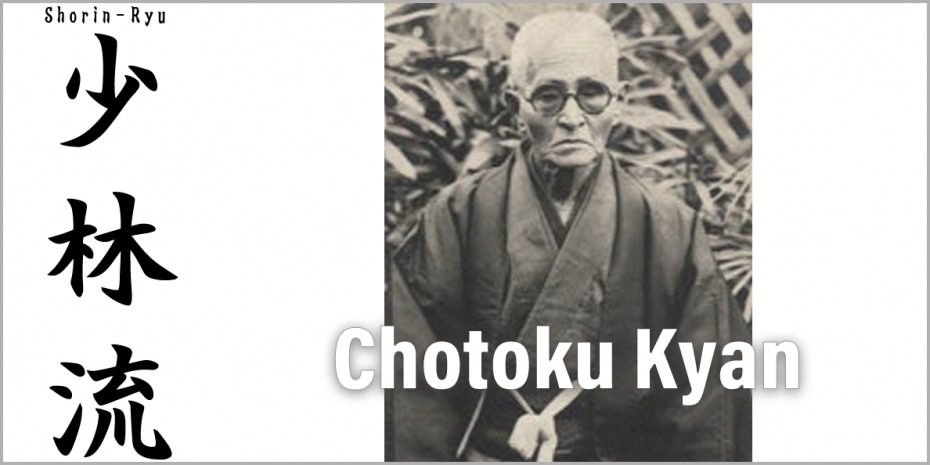
Shorin (少林) -ryu is one of the major Okinawan Karate styles. Chotoku Kyan had a large influence on the styles of Karate that would become Shorin-ryu (少林流). He taught Zenryo Shimabukuro, who studied under Chotoku Kyan for over 10 years. In 1962 Zenryo Shimabukuro built his own Dojo and named it Seibukan, spreading the Okinawan Karate style of Shorin-ryu.

Please click here for a list of Shorin-ryu dojos we offer training at.

Matsubayashi(松林)-Ryu
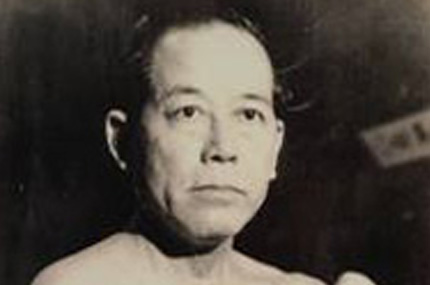
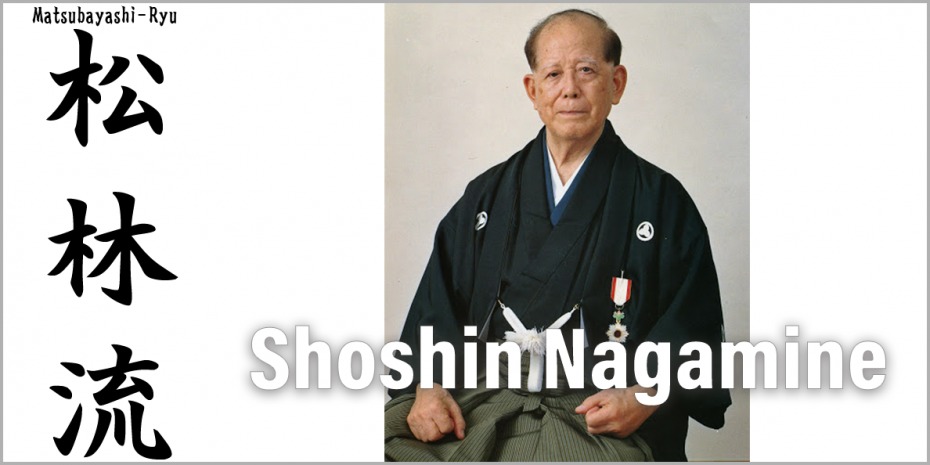
Matsubayashi-ryu (松林流), is a style of Okinawan karate founded by Shoshin Nagamine (1907-1997). Nagamine named his style in honor of the two most important masters that his teachings were influenced by Sokon Matsumura of Shuri-te and Kosaku Matsumora of Tomari-te. He chose to name the school using the first kanji characters from both master’s names Matsu (松) and the style is pronounced in Japanese “Matsubayashi” (松林). Matsubayashi-ryu is one of the main styles of Karate on Okinawa.

Please click here for a list of Shorin-ryu dojos we offer training at.

Information
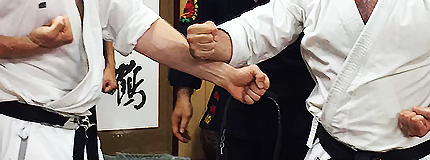

We can arrange a dojo training session or any program based on your requests. Please click here for a list of the many different programs that we have to offer you at Ageshio Japan.
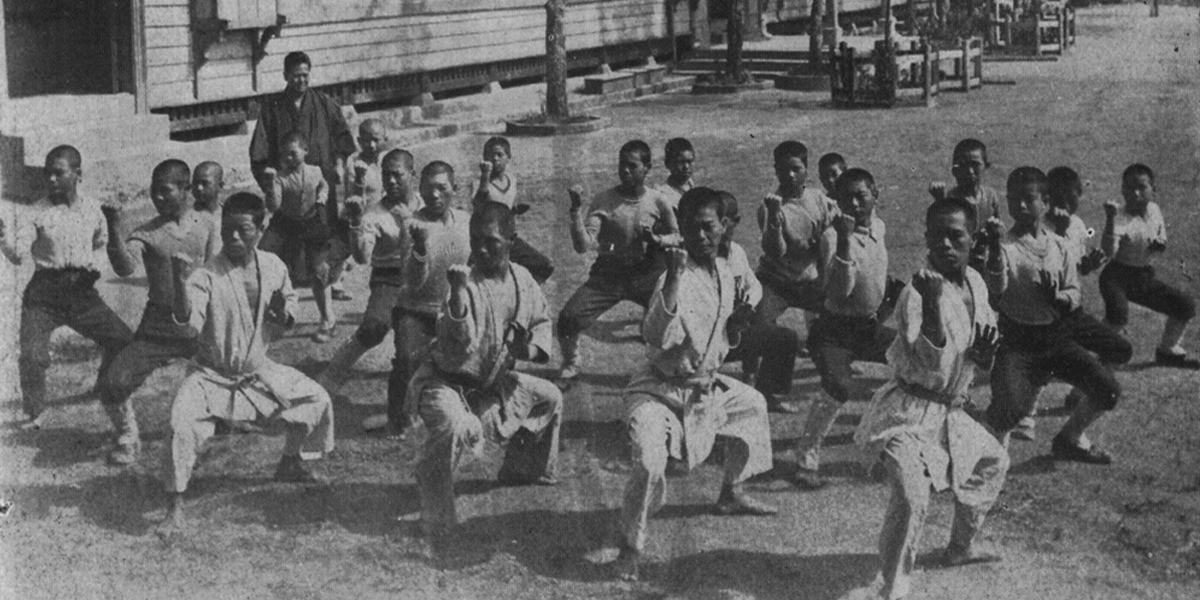


Okinawan Karate History


The empty hand of self-defense of the Ryukyu Kingdom was transmitted from China. Seminal martial arts via the Silk Road into China, found their way to Ryukyu. In 1429, the three kingdoms on Okinawa unified to form the Ryukyu Kingdom. When the Ryukyu King came into power in 1477, traning of martial arts was forbidden. Tō-te and Ryukyu Kobudo continued to be taught in secret. The ban training of martial arts continued in 1609 after Okinawa was invaded by the Satsuma Domain of Japan. The ban contributed to the development of Kobudō which uses common household and farming implements as weaponry. The Okinawans combined Chinese martial arts with the existing local variants to form Tō-te (唐手 Tuudii), also sometimes called Okinawa-Te (沖縄手 Uchinaa-dii).

By the 18th century, different types of Te had developed in three different villages–Shuri, Naha and Tomari in different forms. The styles were named Shuri-TeNaha-Te, and Tomari-Te. Well into the 20th century, the martial arts of Okinawa were generally referred to as te and tii (手) in Japanese and Okinawan for “hand”. Te often varied from one town to another, so to distinguish among the various types of te, the word was often prefaced with its area of origin; for example, Naha-TeShuri-Te, or Tomari-TeShuri-TeNaha-Te and Tomari-Te belong to a family of martial arts that were collectively. All these are Karate. Karate (Okinawa-Te) was taught systematically in Japan after the Taisho Era (after 1926).


Different Types of Te

Shuri-Te

Shuri-Te

Shuri-Te (首里手) is a type of martial art indigenous to the area around Shuri before World War 2. Shuri was the old capital city of the Ryukyu Kingdom.

Masters of Shuri-Te

Masters of Shuri-Te

Matsumura Sokon

Itosu Ankō

Asato Anko

Funakoshi Gichin

Motobu Choki

Chibana Choshin

Mabuni Kenwa

Kyan Chotoku

and more.

Naha-Te

Naha-Te

Naha-Te (那覇手) is a type of martial art indigenous to the area around Naha before World War 2. Naha was the old commercial city of the Ryukyu Kingdom and is now the capital city of Okinawa Prefecture.

Masters of Naha-Te

Masters of Naha-Te

Arakaki Seisho

Higaonna Kanryo

Miyagi Chojun

Mabuni Kenwa

Uechi Kanbun

and more.

Tomari-Te

Tomari-Te

Tomari-Te (泊手) refers to a tradition of martial arts originating from the village of Tomari. It is based on an underground empty-handed fighting style native to Okinawa. Tomari-te developed through the influence of Chinese diplomats and other personages skilled.

Masters of Tomari-Te

Masters of Tomari-Te

Motobu Choki

Matsumora Kosaku

Kyan Chotoku

and more.


Information


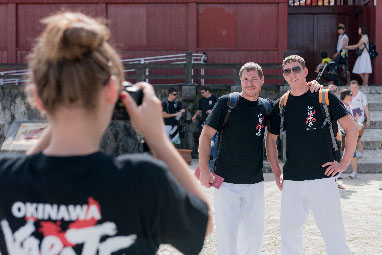
To learn more about the history of Okinawan Karate, please join us on our Karate History Tour, a tour you can experience only in Okinawa. Please click here for more information on our Karate History Tours.


We can arrange a dojo training session or any program based on your requests. Please click here for a list of the many different programs that we have to offer you at Ageshio Japan.



Learning Okinawan Karate

Karate was born in Okinawa, Japan


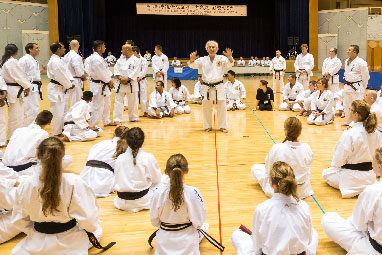
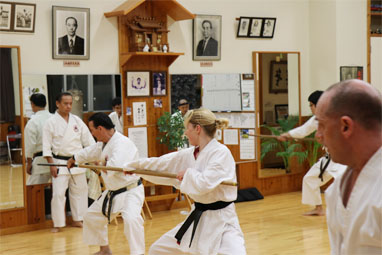
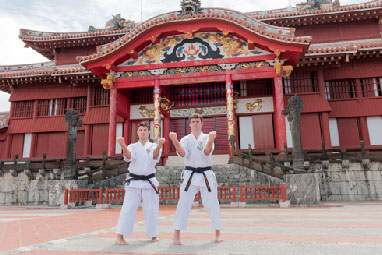
There are more than 400 Karate Dojos in Okinawa. It is a sacred place where people from all over the world come to learn Karate.

There are three exclusive elements that you can learn here.

1. You can learn the original form of Karate

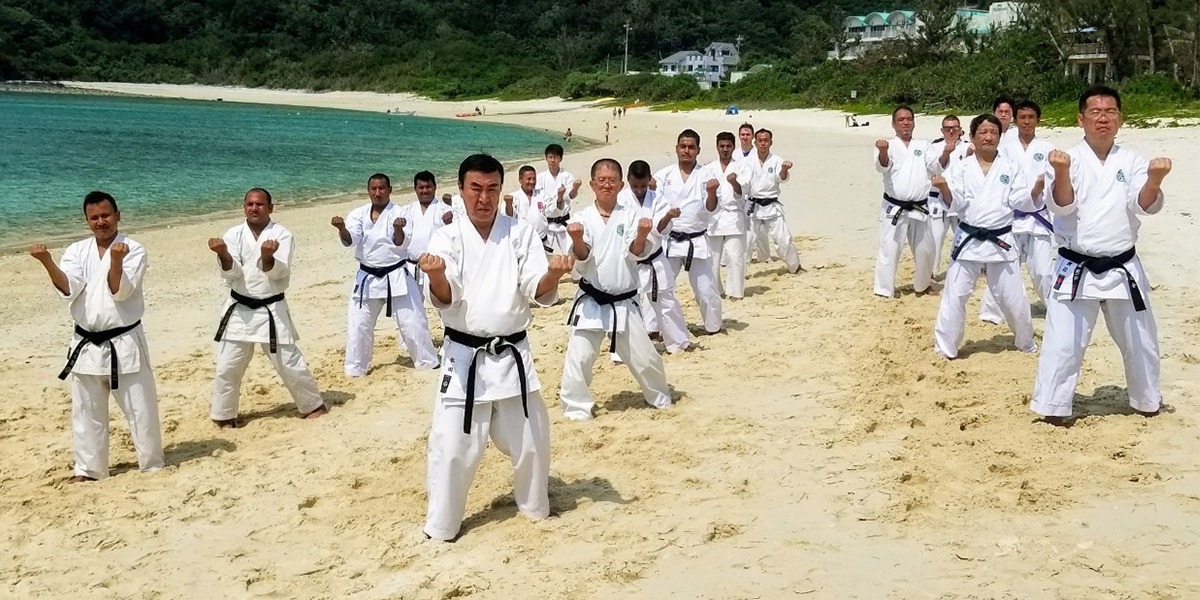
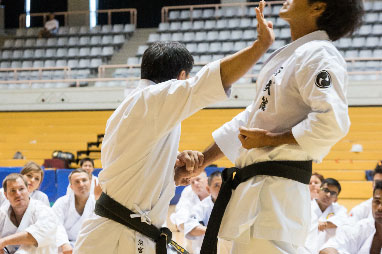
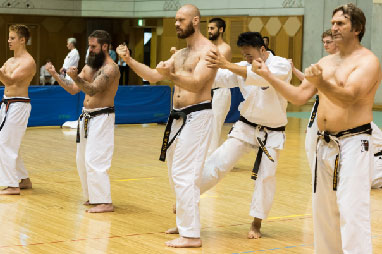
Okinawan Karate is completely different from mainstream Karate. It is an original martial art form which contains many practical techniques and personality formation as its fundamentalism. It includes rigid physical and mental daily training. Karate learned in Okinawa will not only improve your physical condition but also your mental strength.


2. You can learn from Okinawan Karate masters

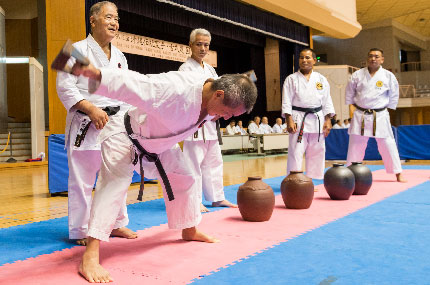
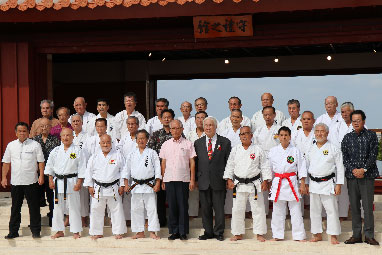
There are more than 400 Karate Dojos in Okinawa, and Karate masters you have seen only in videos exist here. Okinawan Karate is a lifetime martial arts. Some masters are even over 70 or 80 years old but still have incredible skills. You can learn Karate techniques and philosophy from those masters.

Real Okinawan Karate Masters

Karate Workshops

Karate Camps

3. You can feel the Okinawan culture that created Karate

Karate is not aimed at attacking or harming your opponent; it is the contrast, it is about discipline and defense. This philosophy was created in Okinawa and it is what Karate represents. Karate is not just about strength and fighting but also the culture that loves peace and politeness. You can learn Karate in Okinawa where the root of this excellent and peaceful Karate philosophy exists.

Karate Training a Famous Spots

Karate History Tours

Okinawa SightseeingKarate Camps

Information


We can arrange a dojo training session or any program based on your requests. Please click here for a list of the many different programs that we have to offer you at Ageshio Japan.